Zinc Composite Panel vs Aluminium Composite Panel: Which Is Right for Your Facade?
Meena Bazar , India
Introduction
If you are specifying a flat, crisp facade, chances are you have narrowed it down to two options: a zinc composite panel or an aluminium composite panel (ACP). On a drawing they look almost identical. Both are thin, rigid sandwich panels, both deliver large flat surfaces, and both fit the same rainscreen and cassette systems.
The difference shows up over time. One has a painted aluminium skin, the other a solid metal skin that weathers naturally and keeps its character for decades. That choice affects how your building looks in year 20, how much maintenance it needs, and how it scores on sustainability.
This guide walks through how each panel is built, how they compare on durability, fire performance, aesthetics and lifecycle value, and which one suits your project.
What is a zinc composite panel?
A zinc composite panel is a multilayer facade panel with two skins of titanium zinc bonded to a central core. In the case of VMZINC Composite, two 0.5 mm sheets of zinc are thermo-glued to either side of a mineral-rich polyethylene core, giving a total panel thickness of 4 mm.
The result combines the look and longevity of solid zinc with the flatness and rigidity of a composite. Panels come in a standard width of 990 mm (1240 mm on demand) and lengths up to 5 m, and they can be bent and formed for curved and complex shapes.
Because the outer face is real zinc rather than paint, it develops a natural protective patina. You can specify it in pre-weathered surface finishes such as QUARTZ-ZINC®, ANTHRA-ZINC® and the coloured PIGMENTO® range.
New Sri Shivarama, Vizag (India)
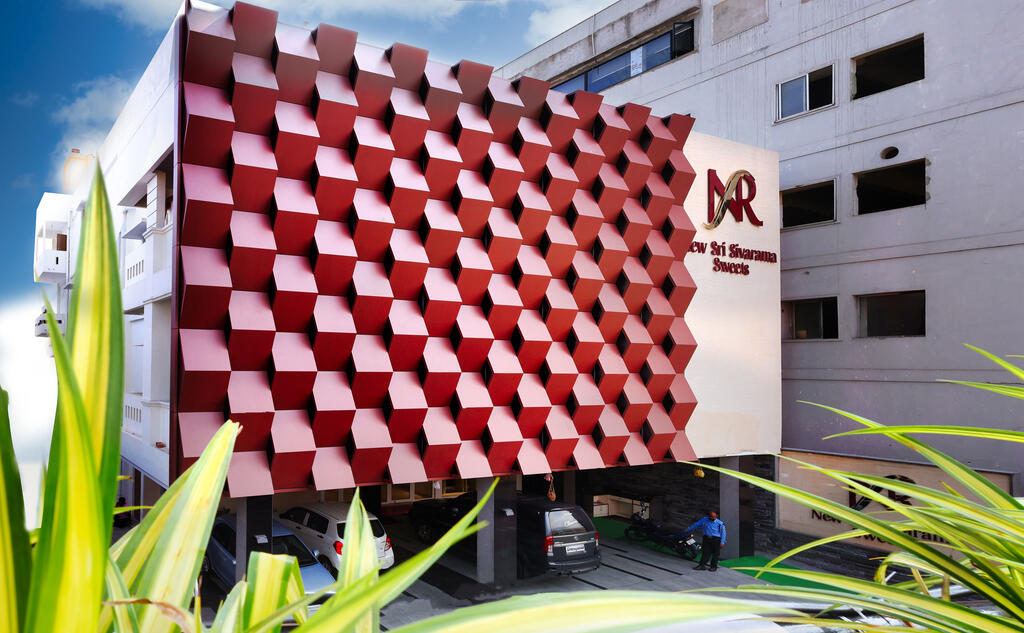
New Sri Shivarama, Vizag (India)
What is an aluminium composite panel?
An aluminium composite panel uses the same sandwich principle: two thin aluminium sheets bonded to a core. The core may be standard polyethylene or a fire-retardant mineral-filled version, and that choice has a big impact on fire performance.
The aluminium faces are coil-coated, usually with a PVDF or polyester paint system. That coating is what you see on the building. It gives ACP its huge colour range and uniform finish, but it also means the facade's appearance depends on how well a thin paint film holds up to sun, heat, rain and pollution.
ACP is light, widely available and familiar to most fabricators, which is why it became the default choice for commercial facades across India.
Zinc composite panel vs ACP at a glance
| Factor | Zinc composite panel | Aluminium composite panel |
|---|---|---|
| Outer skin | Solid titanium zinc, 0.5 mm each side | Aluminium sheet with paint coating |
| Surface finish | Natural metal, self-protecting patina | PVDF or polyester paint film |
| Ageing | Patina deepens; scratches blend back in over time | Paint can fade, chalk or show scratches to bare metal |
| Maintenance | Virtually maintenance-free | Periodic cleaning; recoating if the finish degrades |
| Fire performance | Mineral-rich core for improved reaction to fire | Depends heavily on core grade (PE vs fire-retardant) |
| Colour range | Natural, pre-weathered and PIGMENTO® tones | Very wide, including gloss and metallic paints |
| Formability | Bends well for curves and complex shapes | Good, routed and folded cassettes |
| Recyclability | Zinc is fully recyclable | Recyclable, but painted skins and core complicate it |
| Design life | Decades, with the look retained | Tied to the life of the coating |
World Trade Center, Delhi (India)
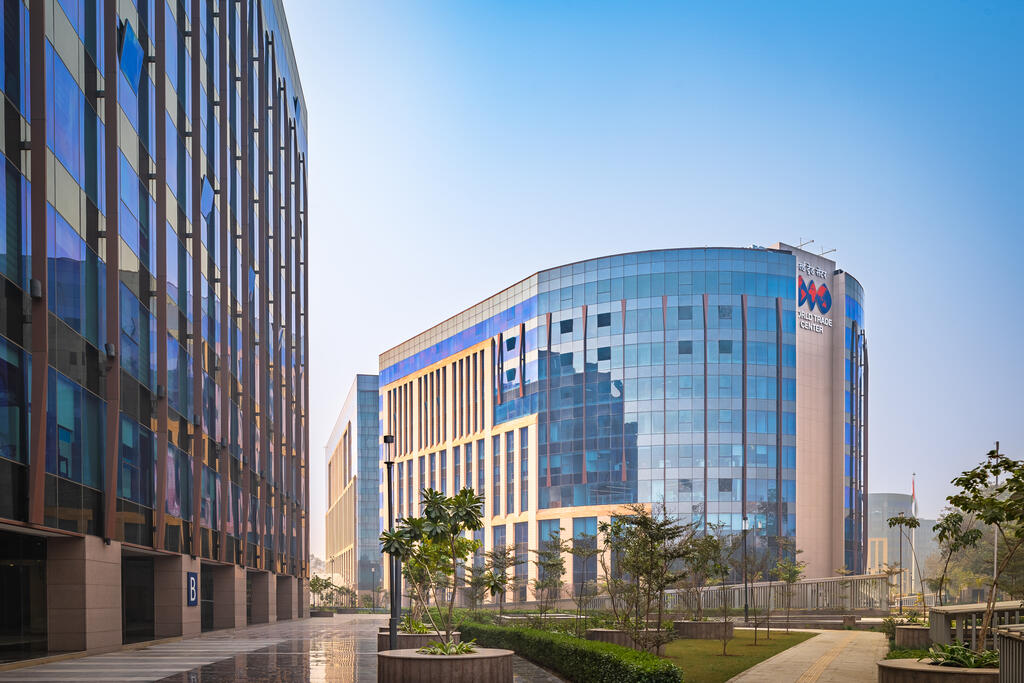
World Trade Center, Delhi (India)
How they compare in detail
Durability and ageing
This is where the two panels part ways. An ACP facade looks its best on the day it is handed over. After that, UV exposure, heat cycles and urban pollution slowly work on the paint film, and in a hot, humid climate like much of India that process can be quicker than expected.
A zinc composite panel ages the other way. When zinc meets the atmosphere it forms a natural patina that protects the metal underneath. Minor scratches gradually blend back in rather than exposing a different material. VMZINC rates its rolled zinc for a service life of up to 100 years on roofs, and the same metal forms the face of the composite panel.
Fire safety
Fire performance is now a top priority for facade consultants and approving authorities. With ACP, the core decides almost everything: a standard polyethylene core behaves very differently from a fire-retardant mineral core, so the exact grade must be checked on every project.
VMZINC Composite uses a mineral-rich core designed for optimum reaction to fire. If your project calls for a fully non-combustible envelope, solid zinc rainscreen systems are the better route, as natural, QUARTZ-ZINC® and ANTHRA-ZINC® finishes are classified A1 under EN 13501-1. Always confirm the classification needed for your building height and use with your fire engineer.
Aesthetics
ACP offers almost any colour you can imagine, including gloss and metallic effects. That flexibility is useful for bold branding, but painted surfaces can look flat and uniform up close.
Zinc has depth. Its matt, mineral texture catches light differently through the day, and pre-weathered finishes like QUARTZ-ZINC® and ANTHRA-ZINC® give a premium, architectural look from day one. For projects that need colour, PIGMENTO® adds subtle tones while keeping the zinc character. Browse the project gallery to see how it reads on real buildings.
Sustainability
Zinc is a natural, fully recyclable material, and VMZINC publishes Environmental Product Declarations to support green building certification. The long design life also matters: a facade that does not need recoating or early replacement uses fewer resources over the building's life. You can read more about the zinc life cycle here.
ACP is recyclable in principle, but separating painted aluminium from the core adds steps, and recoating during the building's life adds to its footprint.
Maintenance and lifecycle value
ACP is often chosen because it looks like the economical option at tender stage. The fuller picture includes cleaning, touch-ups, possible recoating and the risk of an early facade refresh once the finish starts to fade.
A zinc composite panel needs virtually no maintenance and keeps its appearance for decades. When you assess value over the full life of the building rather than at purchase, zinc often makes a strong case, especially for landmark and long-hold commercial assets.
Blue Ski, Surat (India)
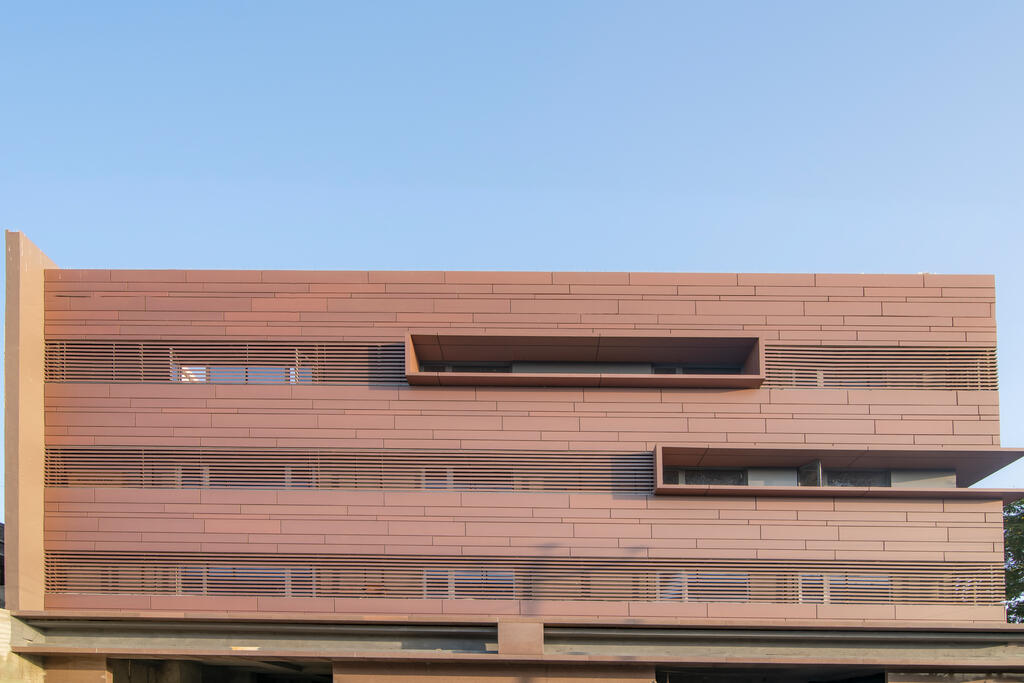
Blue Ski, Surat (India)
Which panel is right for your facade?
Choose a zinc composite panel when:
- The building is a long-term asset, such as a corporate headquarters, hospital, institution or premium residential tower, where the facade must look good for decades.
- You want a natural metal finish with depth and texture rather than a painted surface.
- Low maintenance and a strong sustainability story matter to the client.
- The design includes curves, wraps or large flat planes that need rigid, stable panels.
ACP may still suit:
- Temporary, short-life or fast-changing retail fit-outs.
- Projects where a specific bright or gloss brand colour is non-negotiable.
Zinc composite panels work across facades, curtain wall infill, balconies and interiors, in both new build and renovation. Explore the full range of VMZINC facade systems or see our zinc cladding and roofing solutions for more options.
Frequently asked questions
Is a zinc composite panel better than ACP?
For long-life, premium facades, usually yes. A zinc composite panel has a real metal face that weathers naturally and needs virtually no maintenance, while ACP relies on a paint film that can fade over time.
What is the core of a zinc composite panel?
VMZINC Composite has a mineral-rich polyethylene core sandwiched between two 0.5 mm zinc sheets, designed for optimum reaction to fire.
Does zinc rust or corrode on a facade?
Zinc does not rust. It forms a stable patina that protects the metal and gives it its characteristic appearance.
Can zinc composite panels be used on curved facades?
Yes. The panels bend and form well, so they suit curved walls, wraps and complex geometries as well as large flat surfaces.
What finishes are available?
Natural zinc, pre-weathered QUARTZ-ZINC® and ANTHRA-ZINC®, and coloured PIGMENTO® tones. See all VMZINC surface finishes.
Conclusion
On day one, ACP and a zinc composite panel can look surprisingly similar. Over the life of a building, they tell very different stories. ACP depends on a coating that will eventually show its age, while zinc develops a protective patina, needs virtually no upkeep and stays recyclable at the end of its life.
If you want a facade that looks better with time rather than worse, a zinc composite panel is the more future-proof choice.
Planning a facade project? Our team can help with panel layout, detailing and finish selection through VMZINC design assistance, or you can contact VMZINC India to request samples and documentation.