Zinc Cladding vs Aluminium Composite Panels: Which Is Better for Indian Facades?
Oil India, Noida (India)
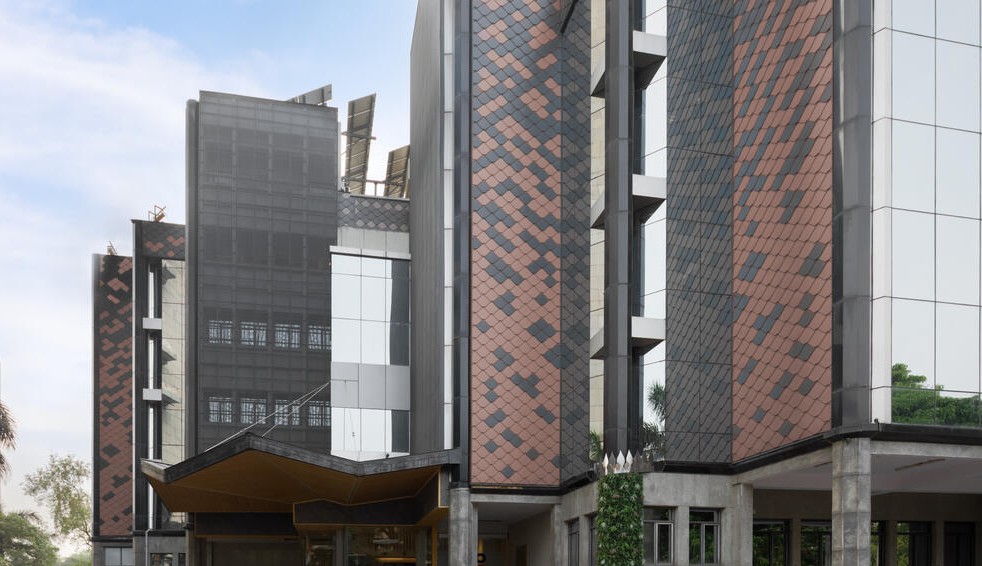
Oil India, Noida (India)
Walk through any Indian city and you will see aluminium composite panels everywhere: showrooms, malls, office blocks, hospitals. ACP became the default facade material because it is light, flat and quick to install. But as buildings get taller, fire codes get stricter and clients start asking how a facade will look in 30 years, more architects are weighing zinc cladding vs ACP before they specify.
The two materials look similar on a render. On a real building, through Indian summers, monsoons and city pollution, they behave very differently. This guide compares them honestly on the points that matter most to architects, facade consultants and developers: fire safety, climate performance, lifespan, design freedom, maintenance and sustainability.
If you already know you want metal on your facade, this will help you decide which metal system fits the project.
What Is Zinc Cladding and What Is ACP?
Zinc cladding
Zinc cladding is made from solid rolled titanium zinc: zinc alloyed with small amounts of copper and titanium for strength and workability. It is installed as standing seam, flat-lock, interlocking rainscreen panels or bespoke cassettes, usually over a ventilated cavity. VMZINC has been rolling zinc for building envelopes since 1837, and its zinc facade systems are used on Indian projects such as the Delhi Metro skywalk at Ajmeri Gate and City Center II in New Delhi.
The defining feature of zinc is its patina. Over time the surface forms a protective layer of zinc carbonate that shields the metal and slowly repairs minor scratches on its own.
Aluminium composite panels (ACP)
An ACP is a sandwich: two thin aluminium skins bonded to a core, finished with a factory-applied paint coating. The core is the part that matters most. It can be polyethylene (PE), a fire-retardant (FR) mineral-filled core, or a higher mineral-content core. The panel looks the same from the outside whichever core is inside, which is exactly why core selection needs careful checking on every project.
Zinc Cladding vs ACP at a Glance
| Factor | Zinc cladding | ACP |
|---|---|---|
| Material | Solid titanium zinc, one material through its thickness | Two aluminium skins bonded to a PE, FR or mineral core |
| Reaction to fire | Non-combustible, Euroclass A1 | Depends on the core: PE and FR cores are combustible; only mineral-core grades reach A2 |
| Surface protection | Natural patina that self-heals minor scratches | Paint coating; scratches and chips expose the skin |
| Typical service life | Many decades, often 80 years or more on facades | Typically 15 to 25 years before visible ageing |
| Ageing | Gets richer and more even with time | Can fade, chalk or delaminate |
| Forming | Curves, folds and complex geometry by hand or machine | Best on flat or simply folded panels |
| Maintenance | Very low, no repainting | Periodic cleaning, sealant and coating upkeep |
| End of life | Fully recyclable | Composite; skins and core must be separated to recycle |
Individual Residence, Delhi (India)
.jpeg)
Individual Residence, Delhi (India)
Comparing Zinc and ACP Factor by Factor
1. Fire safety
This is the question every facade conversation now starts with. Zinc is a non-combustible metal and VMZINC rolled zinc is classified A1 under EN 13501-1, the highest reaction-to-fire class. There is no core to worry about because the panel is zinc all the way through.
With ACP, fire performance depends entirely on what is inside. The aluminium skins do not burn, but PE cores are highly combustible and FR cores still add fuel in a severe fire. Only mineral-core grades reach A2. After several high-profile cladding fires worldwide, India's National Building Code Part 4 and local fire authorities are paying far closer attention to facade materials on tall and high-occupancy buildings. Always confirm the current code and local fire NOC requirements for your project, and ask for test certificates, not just product brochures.
2. Performance in Indian heat, monsoon and pollution
Indian facades face intense UV, surface temperatures well above air temperature, heavy monsoon rain and, in many cities, high levels of airborne dust and pollutants.
Zinc handles these conditions well. Its patina stabilises in the open air and keeps protecting the metal, and its colour does not depend on a paint film, so UV does not fade it. The Delhi Metro skywalk is a good example: the project needed a material that could stand up to Delhi's harsh weather while wrapping a complex curved form.
ACP coatings are tested for UV resistance, but over years of strong sun many panels show fading or chalking, especially in darker and brighter colours. Repeated heating and cooling can also stress the bond between skin and core, and sealant joints dry out and need replacing.
A fair note on zinc: it expands and contracts with temperature, so it must be detailed with the right fixing clips and joints, and it performs best over a ventilated cavity. This is why working with trained installers and using VMZINC technical assistance matters.
3. Lifespan and lifecycle value
The upfront material choice is only one part of the story. A facade that needs recoating, panel replacement or recladding within two decades carries a cost that does not show up on day one.
Zinc facades commonly last 80 years or more with very little intervention. ACP facades are usually expected to perform for 15 to 25 years before ageing becomes visible. For developers holding a building long term, or for institutional and public buildings, that difference shapes the true lifecycle value of the envelope.
4. Aesthetics and design freedom
ACP is very good at one thing: large, flat, uniform panels in almost any paint colour.
Zinc offers something different. It can be curved, folded, perforated and formed into standing seam, flat-lock, interlocking or cassette systems, which makes it ideal for expressive geometry. Its finishes are part of the metal rather than a coating on top. Pre-weathered QUARTZ-ZINC® and ANTHRA-ZINC® give a mature mid-grey or dark grey from day one, while PIGMENTO® adds subtle colour to the pre-weathered surface. You can explore the full range of VMZINC surface finishes and see them on built work in the VMZINC project gallery.
The visual difference over time is the real divide. ACP looks its best on handover day. Zinc keeps maturing and tends to look better at year ten than at year one.
5. Sustainability
Green building ratings are increasingly part of Indian project briefs, and material choice feeds directly into them.
Zinc is a natural, 100% recyclable material with low energy demand for production compared with many other metals, and its long life means fewer replacements over the building's lifetime. VMZINC publishes Environmental Product Declarations and supports projects pursuing LEED and other sustainable building benchmarks. Read more on zinc's life cycle.
ACP's composite structure makes recycling harder, because the aluminium skins have to be separated from the core first, and a shorter service life means the facade may need replacing sooner.
6. Maintenance
Zinc needs no painting and very little upkeep. Rain does most of the cleaning, and the patina takes care of small surface marks.
ACP facades need periodic washing to keep coatings looking fresh, regular checks of sealant joints, and eventually recoating or panel replacement as the finish ages. On tall buildings, every maintenance cycle also means access equipment and disruption.
DMRC, New Delhi (India)
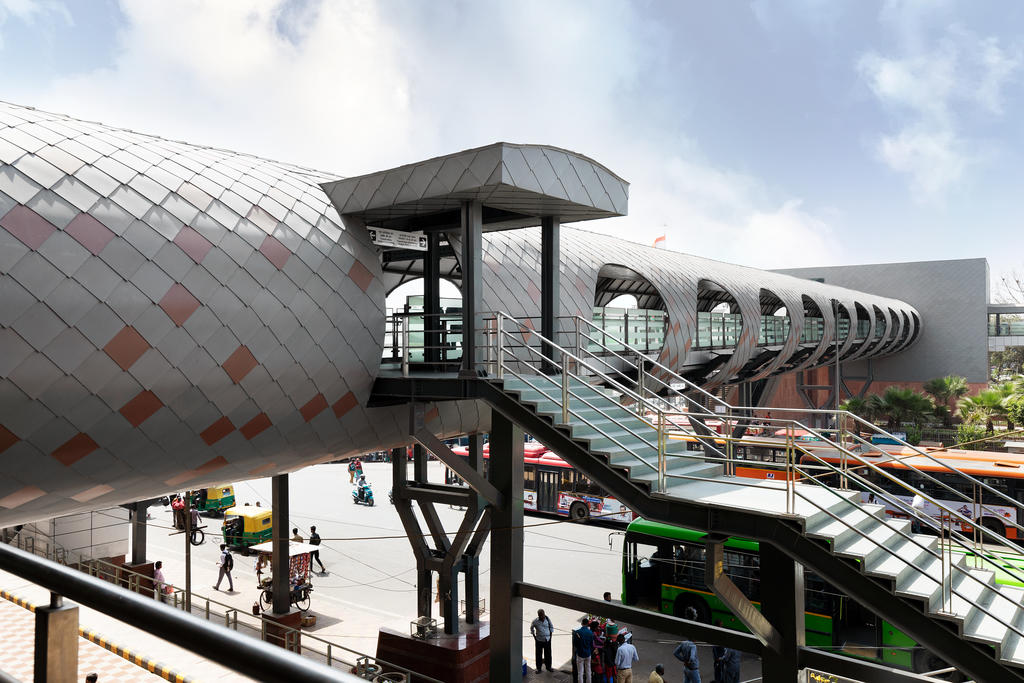
DMRC, New Delhi (India)
Zinc Cladding vs ACP: Which Should You Choose?
There is no single answer for every building, but the pattern is clear.
ACP can make sense for short-life fit-outs, temporary structures, interior features and low-rise signage, where flat panels in bright colours are the priority and the building is not expected to keep its facade for decades. If you do use ACP, check the core grade carefully against current fire requirements.
Zinc cladding is the stronger choice for commercial towers, institutional and public buildings, transport infrastructure, premium residences and any project where fire safety, long life and lasting appearance matter. It is also the natural fit for curved and sculptural designs that composite panels struggle to follow.
Conclusion
When you compare zinc cladding vs ACP on what happens after handover, the difference is hard to ignore. ACP offers a quick, flat finish. Zinc offers a non-combustible facade that withstands Indian heat and monsoons, needs almost no maintenance and keeps looking better for generations.
Planning a facade or roof in zinc? Explore zinc cladding and zinc roofing solutions for India, get early support from the VMZINC design assistance team, or contact VMZINC India to discuss your project.
City Center II, New Delhi (India)
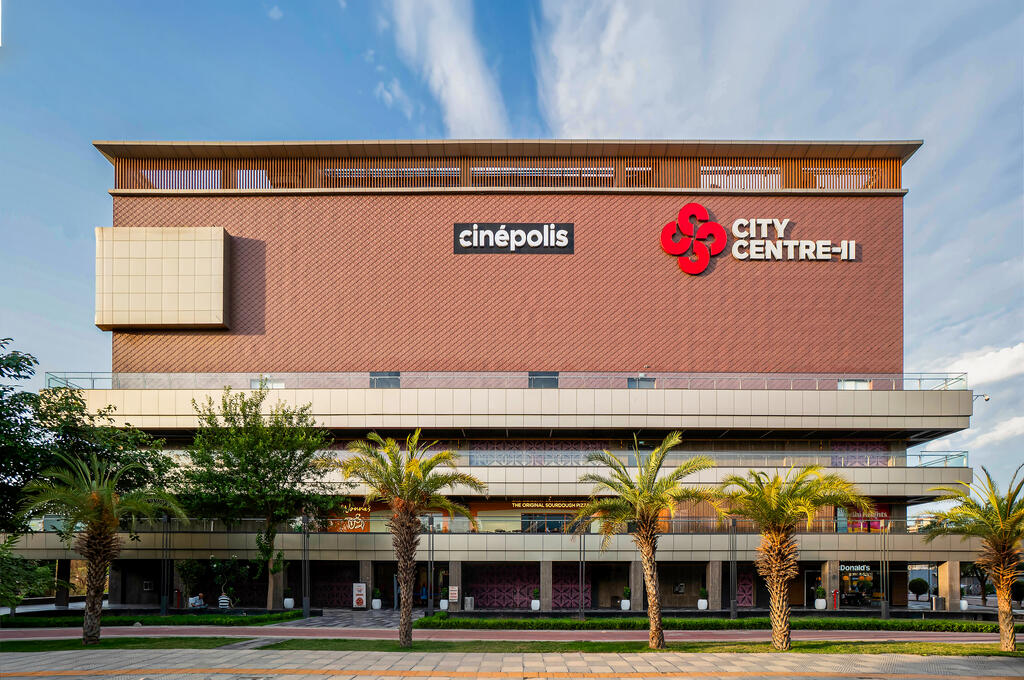
City Center II, New Delhi (India)
Frequently Asked Questions
Is zinc cladding better than ACP?
For most permanent buildings, yes. In the zinc cladding vs ACP comparison, zinc is non-combustible (A1), lasts far longer, needs almost no maintenance and is fully recyclable. ACP is lighter and suited to flat panels, but its fire performance depends on the core and its coating ages faster.
Is zinc cladding suitable for India's climate?
Yes. Zinc's natural patina protects it against rain, humidity and pollution, and its colour does not fade in strong sun because it is not a paint film. Projects such as the Delhi Metro skywalk show how zinc performs in Indian conditions when correctly detailed with ventilation and allowance for thermal movement.
Is ACP cladding fire safe?
It depends on the core. PE-core ACP is highly combustible, FR cores still contribute fuel, and only mineral-core grades reach A2. Always check test certificates and current National Building Code and local fire authority requirements before specifying ACP on tall or high-occupancy buildings.
How long does zinc cladding last?
A well-detailed zinc facade commonly lasts 80 years or more. It does not need repainting, and its appearance matures rather than deteriorates.
Does zinc cladding need maintenance?
Very little. Rain cleans the surface, and the patina helps repair small scratches over time. There are no coatings to renew.
Can zinc be used for curved facades?
Yes. Zinc is highly malleable and can be curved and folded on site or in the workshop, which is why it is often chosen for complex and sculptural architecture.